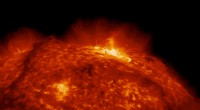
* Both are made of mostly the same elements: The Sun is primarily composed of hydrogen (70%) and helium (28%), with trace amounts of other elements. The Earth, while mostly iron and nickel in its core, also contains significant amounts of hydrogen and oxygen in its atmosphere and water.
* Both are constantly moving: The Earth orbits the Sun, and the Sun itself moves within the Milky Way galaxy.
* Both have magnetic fields: The Earth has a magnetic field that protects us from harmful solar radiation. The Sun also has a very strong magnetic field that influences solar activity like sunspots and solar flares.
* Both emit light and heat: The Sun generates light and heat through nuclear fusion. The Earth reflects sunlight and emits infrared radiation due to its internal heat.
It's important to note that these similarities are mostly superficial. The processes that create these similarities are vastly different, and the overall nature of the Earth and Sun are fundamentally distinct.
Key Differences:
* Size and mass: The Sun is about 109 times wider than the Earth and 333,000 times more massive.
* Composition: The Sun is a giant ball of plasma, while the Earth is a solid planet with a rocky surface, liquid water, and an atmosphere.
* Energy source: The Sun generates energy through nuclear fusion, while the Earth primarily relies on solar energy.
* Life: The Earth supports life, while the Sun is too hot and has no atmosphere to sustain life.
Ultimately, the Earth and Sun are two very different celestial bodies, but they are intertwined in a complex and fascinating relationship that makes life on Earth possible.