1. Gravity:
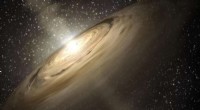
* The Sun's massive gravity holds the entire solar system together. It's like an invisible string pulling the planets in their orbits around it, preventing them from flying off into space.
2. Energy:
* The Sun is a giant nuclear furnace, constantly fusing hydrogen into helium and releasing a tremendous amount of energy in the process.
* This energy travels to Earth and other planets in the form of light and heat.
* Without the Sun's energy, Earth would be a frozen wasteland, and life as we know it wouldn't exist.
3. Solar Wind:
* The Sun continuously emits a stream of charged particles called the solar wind.
* This wind carries energy and particles throughout the solar system, influencing the atmospheres of planets and even causing auroras on Earth.
4. Magnetic Field:
* The Sun has a powerful magnetic field that extends far beyond the solar system.
* This magnetic field helps to shield Earth from harmful cosmic rays and plays a role in the formation of the heliosphere, a bubble around our solar system.
5. Guiding Star:
* The Sun serves as a guiding star for navigators and astronomers, providing a fixed point in the sky that helps them determine their location.
6. Source of Light:
* The Sun is the primary source of light for the solar system, illuminating planets and making it possible for us to see the universe around us.
7. Influence on Life:
* The Sun's energy is fundamental for photosynthesis, the process by which plants use light to create energy.
* This process is essential for the food chain and the oxygen cycle, making the Sun a vital component of life on Earth.
In summary, the Sun is not just a giant ball of fire, but a dynamic and powerful force that shapes the entire solar system. It's the source of energy, gravity, and light, making it the driving force behind everything we see and experience in our celestial neighborhood.