1. The Sun:
* The central star of our solar system, a giant ball of hot, glowing gas.
* Provides the gravitational force that holds the entire solar system together and also provides light and heat that make life possible on Earth.
2. The Planets:
* Eight planets orbit the Sun in elliptical paths.
* These planets can be further categorized into:
* Inner Planets (Terrestrial Planets): Mercury, Venus, Earth, and Mars.
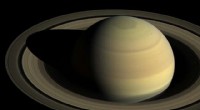
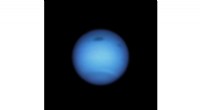
* Outer Planets (Gas Giants): Jupiter, Saturn, Uranus, and Neptune.
3. Other Celestial Objects:
* Dwarf Planets: Pluto, Ceres, Eris, Makemake, and Haumea.
* Moons: Natural satellites that orbit planets.
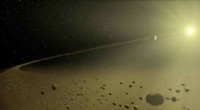
* Asteroids: Rocky bodies that orbit the Sun, mostly found in the asteroid belt between Mars and Jupiter.
* Comets: Icy bodies that orbit the Sun in highly elliptical paths.
Here's a simplified visual representation:
* Sun at the center.
* Inner Planets in close proximity to the Sun.
* Asteroid Belt located between Mars and Jupiter.
* Outer Planets beyond the asteroid belt.
* Dwarf Planets scattered throughout the solar system, including the Kuiper Belt beyond Neptune.
* Comets traveling on elongated orbits, sometimes passing through the inner solar system.
Note: This is a basic overview. The solar system is a complex and fascinating system with many other components and details.