Size and Mass:
* Ganymede is significantly larger: It's the largest moon in our solar system, even bigger than the planet Mercury. It has a diameter of 5,268 km, while the Moon's diameter is 3,474 km.
* Ganymede is much more massive: Ganymede's mass is about 2.5 times greater than the Moon's.
Composition:
* Ganymede is primarily rocky with a substantial icy layer: It's thought to have a metallic core, a rocky mantle, and an icy surface.
* The Moon is primarily rock and has a thin, rocky crust: Its interior includes a solid iron core, a partially molten outer core, and a mantle.
Surface Features:
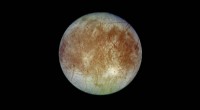
* Ganymede has diverse terrain: It has vast plains, grooved and heavily cratered regions, and vast dark areas thought to be ancient impact basins. It also boasts active tectonic plates and evidence of past volcanic activity.
* The Moon's surface is more uniform: It is primarily covered in craters, maria (dark, smooth plains of volcanic basalt), and highlands.
Atmosphere:
* Ganymede has a very thin atmosphere: It's composed primarily of oxygen, with traces of other elements.
* The Moon has virtually no atmosphere: It has a very thin exosphere composed of gases released from the surface, but it's not a significant factor.
Magnetic Field:
* Ganymede has a significant magnetic field: It's the only moon in the solar system with its own internally generated magnetic field.
* The Moon has a very weak magnetic field: It's induced by the Earth's magnetic field.
Internal Heat:
* Ganymede experiences significant internal heat: It's thought to have a molten core and evidence suggests it may have underground oceans.
* The Moon has less internal heat: Although it was hot in its early history, it has cooled down significantly over time.
Habitability:
* Ganymede's underground ocean makes it a potential candidate for life: The combination of water and internal heat makes it a fascinating target for astrobiologists.
* The Moon is not considered a suitable habitat for life as we know it: While it has water ice in permanently shadowed craters at its poles, the lack of a significant atmosphere and magnetic field makes it a harsh environment.
In summary, while both the Moon and Ganymede are celestial bodies in our solar system, they are quite different in their size, composition, surface features, and potential for supporting life.