Here's why:
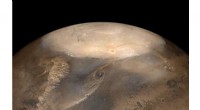
* Telescopes are powerful: Even the most basic telescopes can see through a surprisingly thick atmosphere.
* Light can penetrate: While some atmospheres are thick, they still allow some light to pass through, revealing features beneath.
However, some planets have thick atmospheres that make seeing their surface difficult:
* Venus: Its thick, cloudy atmosphere of carbon dioxide makes it impossible to see the surface through visible light. We use radar and infrared telescopes to study its surface.
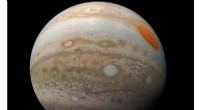
* Jupiter, Saturn, Uranus, Neptune: These gas giants have thick atmospheres composed mostly of hydrogen and helium. While we can see the clouds and storms on their surfaces, it's difficult to see much deeper.
Important Note: While we can't see the surface of some planets directly, we use various techniques to study them. For example, we can use:
* Infrared telescopes: These telescopes can penetrate through clouds and see heat signatures on the surface.
* Radar: This technology can map the surface by bouncing radio waves off it.
* Spacecraft: Sending probes like the Cassini mission to Saturn allows for close-up observations of the planet's surface and atmosphere.
So, while no planet has an atmosphere that's completely opaque to telescopes, some have thick atmospheres that make seeing their surface challenging.