1. Fusion Requires a Critical Mass and Temperature
* Fusion Fuel: Stars like our Sun fuse hydrogen into helium, releasing tremendous energy. This process requires a critical mass of fuel (hydrogen) and extremely high temperatures.
* Core Collapse: When a high-mass star runs out of hydrogen in its core, it begins fusing heavier elements like helium, carbon, and oxygen. This process proceeds through a series of stages, each requiring higher temperatures. Eventually, the core becomes predominantly iron.
* Iron is the "Dead End": Iron is the most stable element, meaning it doesn't release energy when fused. When the core becomes iron, there's no longer a fuel source for fusion, and the outward pressure from fusion ceases.
2. Gravity Wins
* Unstoppable Collapse: With no fusion to counterbalance gravity, the iron core collapses catastrophically. This happens incredibly quickly, on the order of a few milliseconds.
* Density and Temperature: As the core shrinks, it becomes incredibly dense and hot. However, even with these conditions, the iron can't fuse to release energy.
* Core "Bounces": Eventually, the core reaches a point where it can't be compressed further. This creates a shockwave that rebounds outwards.
3. Supernova Explosion
* Outward Blast: The shockwave from the core bounce interacts with the outer layers of the star, causing a colossal explosion known as a supernova.
* Energy Release: This explosion releases an immense amount of energy, including light, neutrinos, and heavy elements.
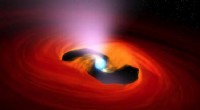
* No Rekindling: The core, now a dense neutron star or a black hole, is not hot enough to reignite fusion. The energy released during the supernova comes from the gravitational collapse of the core, not from further fusion.
In summary, a high-mass star collapses because it runs out of fuel for fusion and gravity takes over. The iron core can't fuse to create energy, and the core's collapse triggers a supernova explosion. There's no rekindling because the core has become too dense and the conditions are no longer suitable for fusion.