How the Sun's Magnetic Field Affects Earth:
* Solar Wind: The Sun constantly emits a stream of charged particles called the solar wind. This wind carries the Sun's magnetic field with it.
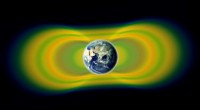
* Geomagnetic Storms: When the Sun has intense activity, like solar flares or coronal mass ejections, it can send powerful bursts of energy and particles towards Earth. These can interact with Earth's magnetic field, causing geomagnetic storms. These storms can disrupt radio communications, damage satellites, and even induce currents in power grids.
* Aurora Borealis/Australis: The interaction between the solar wind and Earth's magnetic field causes charged particles to flow along Earth's magnetic field lines, leading to beautiful displays of light in the sky, known as aurora.
Earth's Rotation:
* Angular Momentum: The Earth's rotation is a result of its formation from a spinning disk of gas and dust billions of years ago. This initial spin resulted in angular momentum, which is conserved and continues to keep the Earth rotating.
* Tidal Forces: While the Sun's gravity does exert tidal forces on Earth, it's not strong enough to significantly change the speed of Earth's rotation. The Moon's gravity has a more significant impact on Earth's rotation.
In summary:
The Sun's magnetic field plays a role in various phenomena on Earth, but it doesn't directly drive the Earth's rotation. Earth's rotation is primarily due to its initial angular momentum and is slightly affected by the Moon's gravity.