* Vast Distances: Stars are incredibly far apart. Even our nearest stellar neighbor, Proxima Centauri, is 4.24 light-years away. This means there's practically no chance of a star colliding with another object, including planets or spacecraft.
* Stable Systems: Stars are incredibly stable and predictable. Their nuclear fusion processes release immense energy, but they are balanced and do not randomly explode or emit harmful radiation in a way that would threaten objects in space.
However, stars can be indirectly dangerous:
* Solar Flares and Coronal Mass Ejections (CMEs): Our own Sun, while a stable star, can experience these powerful bursts of energy that can disrupt satellites, communication systems, and even power grids on Earth.
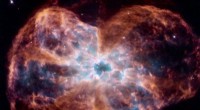
* Supernovae: When massive stars reach the end of their lives, they explode in a supernova. This explosion releases an incredible amount of energy, radiation, and particles that can be harmful to life and even wipe out entire planetary systems. While rare, these events can be devastating in their immediate vicinity.
* Gamma-ray Bursts: These are the most powerful explosions in the universe and can last from a fraction of a second to a few minutes. While rare, they can release enough energy to sterilize entire galaxies, making them incredibly dangerous.
In summary:
* Stars themselves are not directly dangerous in space due to their vast distances and stable nature.
* However, certain events associated with stars, like solar flares, supernovas, and gamma-ray bursts, can be extremely dangerous and pose a risk to life and technology.