* Earth's atmosphere distorts light: The air around us is constantly moving, and this turbulence distorts the light coming from space. This makes ground-based telescopes see blurry images.
* Atmosphere blocks certain wavelengths: Our atmosphere absorbs some wavelengths of light, particularly infrared and ultraviolet. This means that ground-based telescopes can't see these wavelengths, which carry valuable information about the universe.
By placing the Hubble telescope in orbit above Earth's atmosphere, scientists could overcome these limitations:
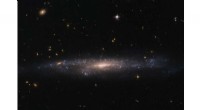
* Sharper images: Hubble's images are incredibly sharp and detailed because it's not affected by atmospheric distortion.
* Wider spectrum of light: Hubble can observe a wider range of wavelengths, including infrared and ultraviolet, giving us a more complete picture of the universe.
In short, the Hubble Space Telescope was launched to provide astronomers with a clearer and more comprehensive view of the cosmos than ever before possible.