Here's a simplified timeline:
* Stage 1: Molecular Cloud Collapse (1 million years): A large, cold cloud of gas and dust begins to collapse under its own gravity. This collapse takes about 1 million years.
* Stage 2: Protostar Formation (100,000 years): As the cloud collapses, the material in the center becomes denser and hotter. This forms a protostar, a young star that is still gathering mass. This stage takes about 100,000 years.
* Stage 3: T-Tauri Phase (10 million years): The protostar continues to grow and heat up. It eventually becomes hot enough to ignite nuclear fusion in its core. This marks the birth of a true star. The T-Tauri phase, during which the star is still somewhat unstable, lasts about 10 million years.
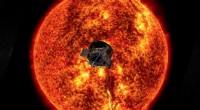
* Stage 4: Main Sequence Star (10 billion years): Once nuclear fusion is stable, the star enters the main sequence phase, where it will spend most of its life. Our Sun is currently in this phase.
This is a very simplified explanation, and the actual process of star formation is far more complex. However, it gives you a general idea of the time scales involved.