What We Know:
* Terrestrial Planets: The rocky planets in our solar system (Mercury, Venus, Earth, Mars) definitely have cores. They are composed primarily of iron and nickel, with some lighter elements. This core forms during the planet's early formation through gravity pulling denser materials to the center.
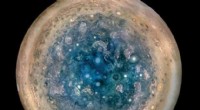
* Giant Planets: The gas giants (Jupiter, Saturn, Uranus, Neptune) are more complex. Their cores are believed to be made of rock and ice, surrounded by a thick atmosphere of hydrogen and helium. While there's no direct observation of these cores, scientists deduce their presence based on the planets' gravity and magnetic fields.
What We Don't Know:
* Exoplanets: With thousands of exoplanets discovered, we lack the detailed information to confidently state whether all of them have cores. However, based on our understanding of planetary formation, it's likely many do, especially those with similar compositions to our own solar system's planets.
* Small Planets: The smallest planets, especially those with low mass, might not have a distinct core. The gravitational pull might not be strong enough to pull all the heavier materials to the center, resulting in a more uniform composition.
In Summary:
* Most likely, all planets with a significant mass will have a core, regardless of their composition.
* However, the nature of the core (solid, liquid, or a mix) and its size and composition will vary greatly depending on the planet's size, formation history, and overall composition.
It's a fascinating area of ongoing research, and future observations and advancements in planetary science will help us understand the core structures of planets in more detail.