* Gravity: The Sun's immense gravity is the primary force holding the planets in their orbits. It acts like an invisible tether, pulling the planets towards it.
* Inertia: Planets are constantly moving forward, and this inertia (a tendency to resist changes in motion) prevents them from falling directly into the Sun. The combination of gravity pulling inward and inertia pushing outward creates a balance that results in an orbit.
* Angular Momentum: This is a measure of an object's tendency to rotate, and it plays a role in keeping the planets in their orbits. It's why they don't just spiral in towards the Sun.
Imagine a ball on a string. You swing the ball, and it moves in a circle. The string acts like gravity, pulling the ball inwards, and the ball's inertia keeps it moving forward, causing it to swing in a circle. The planets behave similarly.
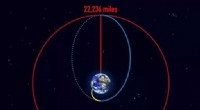
It's important to remember that planets don't orbit in perfectly circular paths, but in slightly elliptical ones. This is due to the influence of other planets' gravity and other factors.
So, instead of a single source, it's a complex interplay of forces that keeps the planets in their orbits around the Sun.