The Sun:
- The central star of our solar system, a giant ball of hot gas that provides light and heat to everything in the system.
Planets:
- Inner Planets (Terrestrial Planets):
- Mercury: Smallest planet, closest to the Sun, rocky and cratered.
- Venus: Hottest planet, thick atmosphere, volcanic activity.
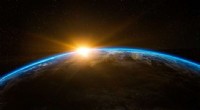
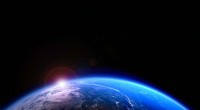
- Earth: Our home, with liquid water, atmosphere, and life.
- Mars: Red planet, thin atmosphere, potential for past life.
- Outer Planets (Gas Giants):
- Jupiter: Largest planet, mostly gas, has a Great Red Spot.
- Saturn: Known for its rings, mostly gas, many moons.
- Uranus: Ice giant, tilted on its side, has faint rings.
- Neptune: Coldest planet, icy, has strong winds.
Dwarf Planets:
- These are celestial bodies that orbit the Sun like planets but are smaller and haven't cleared their orbital path of other objects. Some examples include Pluto, Ceres, Eris, and Makemake.
Moons:
- Natural satellites that orbit planets. Earth has one moon, while other planets have many. Some notable examples include Jupiter's moon Europa, Saturn's moon Titan, and Neptune's moon Triton.
Asteroids:
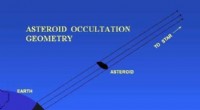
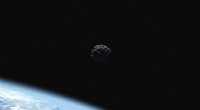
- Rocky bodies that mostly orbit the Sun between Mars and Jupiter in the asteroid belt.
Comets:
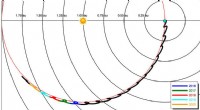
- Icy bodies that orbit the Sun in highly elliptical paths, leaving behind a trail of gas and dust as they get closer to the Sun.
Other Objects:
- Kuiper Belt: A region beyond Neptune populated by icy bodies.
- Oort Cloud: A theoretical cloud of icy bodies located far beyond the Kuiper Belt, believed to be the source of many comets.
These are the major members of our solar system, and there are many other smaller objects like meteoroids, interplanetary dust, and the solar wind that also contribute to the system's complexity.