1. Spectroscopy:
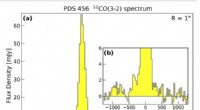
* Light Analysis: Stars emit light that contains information about their composition. Scientists use spectroscopes to split this light into its individual wavelengths, creating a spectrum.
* Absorption and Emission Lines: Each element absorbs and emits light at specific wavelengths. These unique "fingerprints" appear as dark (absorption) or bright (emission) lines in the spectrum.
* Elemental Identification: By analyzing the position and intensity of these lines, astronomers can identify the elements present in the star's atmosphere and their relative abundance.
2. Other Techniques:
* Interferometry: This technique combines light from multiple telescopes to create a higher-resolution image of the star. This allows scientists to study the star's surface more closely and analyze the composition of different regions.
* Astrophysical Models: These models use theoretical calculations and computer simulations to predict the chemical composition of stars based on their properties like mass, temperature, and luminosity.
Key Elements and Abundance:
* Hydrogen (H) and Helium (He): These are the most abundant elements in the universe and make up the vast majority of a star's mass.
* Trace Elements: While hydrogen and helium dominate, other elements are present in smaller quantities, including carbon, oxygen, nitrogen, iron, and more.
* Stellar Evolution: The chemical composition of a star changes over its lifetime as it fuses elements in its core. This allows scientists to track the star's evolution and understand the processes occurring within it.
Challenges and Future Directions:
* Distance: Determining the chemical composition of distant stars is challenging due to the faintness of their light.
* Noise and Interference: Earth's atmosphere and other celestial objects can interfere with observations, making it difficult to obtain precise spectra.
* New Technologies: New technologies like space telescopes, high-resolution spectrometers, and improved astrophysical models are continuously improving our understanding of stellar composition.
In summary, by analyzing the light emitted by stars and using a combination of techniques, scientists are able to unravel the secrets of their chemical makeup, providing valuable insights into the universe's origins and evolution.