1. They all orbit around the center of the Milky Way Galaxy:
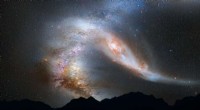
* The sun, like all stars in our galaxy, is gravitationally bound to the Milky Way's center. It orbits around this center in a roughly circular path, taking approximately 225 to 250 million years to complete one revolution.
* Other stars also orbit the galactic center, though their orbital periods can vary depending on their distance from the center.
2. They all have their own proper motion:
* Besides their galactic motion, stars and the sun also have their own independent motions, called proper motion. This refers to their movement across the celestial sphere as seen from Earth.
* This motion is much slower than their orbital motion, but over long periods of time, it can lead to significant shifts in their positions relative to each other.
3. They all follow the laws of gravity:
* The motion of all stars, including the sun, is governed by the laws of gravity. Their orbits and proper motions are determined by the gravitational influence of other stars, gas clouds, and the central galactic bulge.
4. They all experience stellar evolution:
* Stars, including the sun, go through a life cycle of evolution, changing their properties over time. They are born from collapsing clouds of gas and dust, they burn hydrogen into helium for a significant portion of their lives, and eventually, they evolve into different stages, such as red giants, white dwarfs, or even supernovae.
However, there are also important differences:
* Mass: The sun is a relatively average-sized star, while many other stars have significantly different masses.
* Luminosity: The sun's luminosity is not necessarily representative of all stars. Some stars are much brighter, while others are much fainter.
* Age: Stars have different ages and life expectancies based on their mass and composition. The sun is roughly 4.5 billion years old and has an expected lifespan of around 10 billion years.
In summary: While the sun and stars share similarities in their motion and adherence to the laws of physics, they also differ significantly in their mass, luminosity, and evolutionary stages.