* No Solid Surface: Jovian planets are gas giants, meaning they don't have a solid surface like Earth or Mars. Their atmospheres gradually become denser with depth, eventually transitioning into a liquid metallic hydrogen core.
* Extreme Atmospheric Pressure: The pressure at the "surface" of a Jovian planet is immense, far exceeding what any spacecraft could withstand. Think of being crushed by the weight of thousands of atmospheres.
* Turbulent Atmospheres: The atmospheres of Jovian planets are extremely turbulent, with strong winds and massive storms. These conditions would make it extremely difficult for a spacecraft to maintain control and a stable landing.
* Heat and Radiation: The intense heat and radiation coming from these planets would be detrimental to spacecraft systems.
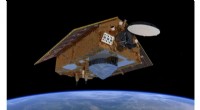
Instead of landing, spacecraft exploring Jovian planets usually perform flybys or enter orbit, allowing them to study the atmosphere and moons from a safe distance.
Here's an analogy: Imagine trying to land a plane on a giant, swirling cloud. It wouldn't be possible!