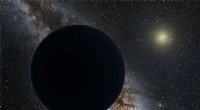
* Vast distances: The planets in our solar system are incredibly far apart. Even though they all orbit the Sun, their orbits are spaced out enough that collisions are extremely unlikely.
* Gravitational balance: The Sun's gravity holds the planets in their orbits. These orbits are relatively stable and predictable, meaning planets generally follow their paths without significant deviations.
* Kepler's laws of planetary motion: These laws dictate that planets move faster when closer to the Sun and slower when farther away. This means that even if two planets were on similar orbital paths, their speeds would likely be different, minimizing the chance of a collision.
* Planetary inclinations: The planets don't orbit the Sun in a perfectly flat plane. Their orbits are slightly tilted, further reducing the probability of a direct encounter.
Exceptions:
While collisions are rare, they are not impossible. Here are a few examples:
* Asteroids and comets: These smaller bodies can collide with planets or moons, creating craters or even significant events like the extinction of the dinosaurs.
* Dwarf planets: Dwarf planets like Pluto can have their orbits disrupted by the gravitational pull of larger planets, leading to the possibility of close encounters.
* Early solar system: In the early solar system, collisions were more common as the planets were forming and migrating.
Overall, the solar system is a remarkably well-ordered system, with vast distances, stable orbits, and predictable planetary motions that minimize the chances of collisions.