* Gravity's Pull: Every object in the universe with mass has a gravitational pull. The more massive an object is, the stronger its gravitational pull.
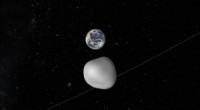
* Planet's Dominance: Planets are much more massive than their moons. This means the planet's gravity is much stronger, pulling the moon towards it.
* Orbital Motion: The moon doesn't just fall directly into the planet because it also has its own motion – it's moving forward. This forward motion combined with the planet's gravitational pull creates a curved path, resulting in an orbit.
* Balance: The moon's forward motion and the planet's gravitational pull are in balance. If the moon moved too slowly, it would be pulled into the planet. If it moved too fast, it would fly off into space.
Think of it like this: Imagine you're swinging a ball on a string. You're providing the force that keeps the ball moving in a circle, just like the planet's gravity keeps the moon in orbit.
This is a simplified explanation, but it helps to understand the fundamental principle of why moons orbit planets.