Solar System:
* Moon: NASA's Apollo program landed the first humans on the Moon in 1969. They've continued robotic missions like the Lunar Reconnaissance Orbiter (LRO) to map the Moon's surface and learn more about its history.
* Mars: NASA has sent numerous robotic missions to Mars, including rovers like Curiosity and Perseverance, which are currently exploring the planet's surface and searching for signs of past life.
* Venus: NASA has sent probes like Mariner 2 and Magellan to Venus, revealing its incredibly hot and hostile atmosphere and surface.
* Mercury: NASA's Messenger spacecraft orbited Mercury, providing detailed images and information about its surface and magnetic field.
* Jupiter: NASA's Juno spacecraft is currently orbiting Jupiter, studying its atmosphere, magnetic field, and the formation of its Great Red Spot.
* Saturn: NASA's Cassini mission orbited Saturn for 13 years, providing stunning images of its rings and moons, including Titan, which has a dense atmosphere and potential for life.
* Outer Solar System: NASA has also sent missions to other planets in the outer solar system, including Voyager 1 and 2, which are now exploring interstellar space.
Beyond the Solar System:
* Exoplanets: NASA has a number of missions dedicated to finding and studying planets outside our solar system (exoplanets). This includes the Kepler mission, which discovered thousands of exoplanets, and the Transiting Exoplanet Survey Satellite (TESS), which is searching for nearby exoplanets.
* The Sun: NASA has numerous missions studying the Sun, including the Parker Solar Probe, which is flying closer to the Sun than any other spacecraft before.
Other Notable Missions:
* Hubble Space Telescope: This iconic telescope has provided stunning images of the universe and has played a crucial role in advancing our understanding of the cosmos.
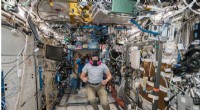
* International Space Station (ISS): NASA is a major partner in the International Space Station, a long-duration space station that provides a platform for scientific research and technology development.
Future Explorations:
* Artemis Program: NASA is currently working on the Artemis program, which aims to land the first woman and the next man on the Moon by 2024 and establish a sustainable lunar presence.
* Mars Sample Return: NASA plans to send missions to collect samples from Mars and bring them back to Earth for detailed analysis, which could provide more definitive evidence of past life on the planet.
* JWST (James Webb Space Telescope): This powerful telescope is now operational, providing unprecedented views of the early universe and the formation of stars and galaxies.
NASA's exploration efforts continue to push the boundaries of what we know about the universe, with plans to send humans to Mars in the future.