Ground-based Telescopes:
* Optical Telescopes: These telescopes use visible light to observe the night sky. They are often equipped with specialized cameras that can capture images of faint objects, including NEOs.
* Radar Telescopes: These telescopes use radio waves to bounce off NEOs and measure their distance, size, and shape. They can also be used to track the orbit of NEOs with high precision.
Space-based Telescopes:
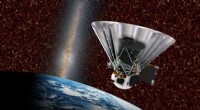
* Space Telescopes: Telescopes in space are not affected by the Earth's atmosphere, which can interfere with observations. This allows them to detect fainter objects and make more accurate measurements. Examples include the NEOWISE mission and the Hubble Space Telescope.
Detection Methods:
* Survey Programs: Dedicated surveys systematically scan the sky for NEOs. These programs use powerful telescopes and sophisticated software to analyze the data.
* Asteroid Tracking: Once a NEO is discovered, its orbit is tracked over time to determine its future path. This helps scientists predict whether it poses a threat to Earth.
* Follow-up Observations: Once a potential NEO is identified, additional observations are conducted to confirm its nature and refine its orbit.
Specific Examples:
* Panoramic Survey Telescope and Rapid Response System (Pan-STARRS): A ground-based observatory in Hawaii that is dedicated to finding NEOs.
* Catalina Sky Survey: Another ground-based survey program, located in Arizona, which has discovered thousands of NEOs.
* Near-Earth Object Wide-field Infrared Survey Explorer (NEOWISE): A space telescope that uses infrared light to detect NEOs.
Challenges:
* Faintness: Many NEOs are very faint, making them difficult to detect.
* Orbit Uncertainties: The orbits of NEOs can be difficult to predict precisely, especially for newly discovered objects.
* Large Sky Area: The sky is vast, making it challenging to survey the entire area for NEOs.
Future Technologies:
* Larger Telescopes: Future telescopes, such as the Large Synoptic Survey Telescope (LSST), will be even more powerful, enabling the detection of fainter and more distant NEOs.
* Space-based Telescopes: New space telescopes, specifically designed for NEO detection, are being planned.
The ongoing efforts to detect and track NEOs are critical for protecting Earth from potentially hazardous asteroids.