1. Expansion of the Universe:
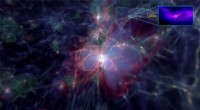
* Hubble's Law: Measuring the redshift of distant galaxies, Edwin Hubble discovered a direct relationship between a galaxy's distance and its redshift. This relationship, known as Hubble's Law, provided the first observational evidence that the universe is expanding.
* Cosmic Microwave Background Radiation (CMB): The redshift of the CMB, a faint afterglow of the Big Bang, further supports the expansion of the universe and provides information about its early state.
2. Distance Measurement:
* Cosmological Distance Ladder: Redshift is a crucial tool in the cosmological distance ladder, a method used to determine distances to celestial objects. By calibrating the relationship between redshift and distance for nearby objects, astronomers can estimate distances to more distant objects.
3. Composition of the Universe:
* Dark Energy: Observations of distant supernovae, which exhibit a peculiar redshift behavior, provided evidence for the existence of dark energy, a mysterious force driving the accelerating expansion of the universe.
* Dark Matter: While not directly measured by redshift, the gravitational effects of dark matter can be inferred from the observed redshift of galaxies and galaxy clusters.
4. Formation and Evolution of Galaxies:
* Galaxy Evolution: Redshift allows astronomers to study galaxies at different stages of their evolution. The light from distant galaxies has traveled for billions of years, so we see them as they were in the past, providing insights into the processes that shaped galaxies over time.
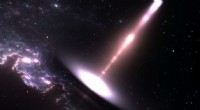
* Supermassive Black Holes: Redshift measurements are used to study the behavior of supermassive black holes at the centers of galaxies. These black holes emit powerful jets of particles that can be detected through their redshift signature.
5. Fundamental Physics:
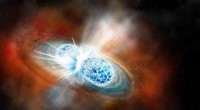
* General Relativity: Redshift observations provide key tests for Einstein's theory of general relativity, which predicts how gravity affects light.
In summary, redshift measurements have been instrumental in:
* Confirming the expanding universe
* Determining distances in the universe
* Understanding the composition of the universe
* Studying the formation and evolution of galaxies
* Testing fundamental physics
Redshift is a powerful tool for exploring the cosmos and uncovering its secrets.