Here's why:
* Rotation Period: Jupiter completes one rotation on its axis in just under 10 hours. This is significantly faster than Earth, which takes about 24 hours.
* Equatorial Speed: Due to its rapid rotation, Jupiter's equator spins at a speed of over 45,000 kilometers per hour (28,000 miles per hour).
This fast rotation has several notable effects on Jupiter, including:
* Flattened Shape: Jupiter is noticeably flattened at its poles and bulging at its equator due to centrifugal force.
* Strong Magnetic Field: Jupiter's rapid spin generates an incredibly strong magnetic field, the largest in the solar system.
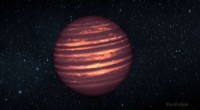
* Atmospheric Bands: The planet's fast rotation helps create the distinctive bands of clouds we see in its atmosphere.