Size and Mass:
* The largest planet: Jupiter is the biggest planet in our solar system, with a diameter 11 times larger than Earth's.
* Massive gravity: It's so massive that it's more than twice as massive as all the other planets combined.
Composition and Atmosphere:
* Mostly hydrogen and helium: Jupiter is primarily made up of hydrogen and helium, similar to the Sun.
* Colorful bands: Its atmosphere is marked by swirling clouds of different colors due to variations in chemical composition and temperature.
* The Great Red Spot: This is a giant, persistent storm that has been raging for centuries. It's larger than Earth and visible even through small telescopes.
Moons:
* 79 known moons: Jupiter has the largest number of moons in our solar system, with 79 confirmed and more potentially waiting to be discovered.
* The four Galilean moons: Io, Europa, Ganymede, and Callisto are the largest and most prominent moons. Each has unique characteristics, like Io's volcanic activity and Europa's possible subglacial ocean.
Magnetic Field:
* Strongest magnetic field: Jupiter has the strongest magnetic field in our solar system, 14 times stronger than Earth's. It creates a vast magnetosphere that extends millions of kilometers into space.
Rings:
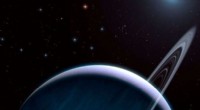
* Faint rings: While not as spectacular as Saturn's rings, Jupiter has a system of faint rings made up of dust particles.
Internal Structure:
* No solid surface: Jupiter is a gas giant, meaning it has no solid surface. It's thought to have a core of dense, metallic hydrogen, but the exact composition is still debated.
Other Interesting Features:
* Radio emissions: Jupiter emits strong radio waves, which can be detected from Earth.
* Auroras: Like Earth, Jupiter has auroras, but they are much larger and brighter.
In summary, Jupiter is a fascinating and unique planet with a massive size, diverse atmosphere, numerous moons, a powerful magnetic field, and other remarkable features. Its study continues to provide valuable insights into the formation and evolution of our solar system.