The study of the universe has progressed dramatically with the advent of modern space facilities and equipment. Here's a glimpse of some of the key players:
Space Telescopes:
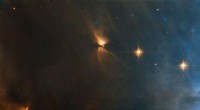
* Hubble Space Telescope (HST): Orbiting Earth since 1990, HST has revolutionized our understanding of the universe with its breathtaking images and observations. It captures light across the electromagnetic spectrum, from ultraviolet to near-infrared, allowing us to study stars, galaxies, and nebulae with incredible detail.
* James Webb Space Telescope (JWST): Launched in 2021, JWST is the successor to Hubble, with a larger primary mirror and the ability to observe in infrared wavelengths. It's designed to peer further back in time, studying the first stars and galaxies that formed after the Big Bang.
* Chandra X-ray Observatory: Focusing on X-ray emissions, Chandra provides insights into high-energy phenomena like black holes, supernova remnants, and galaxy clusters.
* Spitzer Space Telescope: This infrared telescope has provided valuable data on the formation of stars and planets, as well as the composition of distant galaxies.
* Gaia: Gaia's mission is to map the Milky Way galaxy in 3D, measuring the positions and motions of billions of stars. Its data is helping us understand the structure and evolution of our galaxy.
Other Spacecraft:
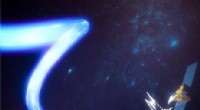
* Voyager 1 & 2: These spacecraft have explored the outer solar system, providing unprecedented close-up views of Jupiter, Saturn, Uranus, and Neptune, as well as the heliosphere (the Sun's protective bubble).
* Cassini-Huygens: This mission focused on Saturn and its moons, including the discovery of methane lakes on Titan.
* Juno: Currently orbiting Jupiter, Juno is studying the planet's magnetic field, atmosphere, and composition.
* Parker Solar Probe: This probe is venturing into the Sun's corona, providing close-up observations of our star.
Ground-based Facilities:
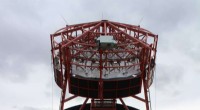
* Radio Telescopes: These telescopes, such as the Very Large Array (VLA) and the Atacama Large Millimeter/submillimeter Array (ALMA), detect radio waves emitted from space, revealing information about distant galaxies, black holes, and star-forming regions.
* Optical Telescopes: Giant optical telescopes like the Very Large Telescope (VLT) and the Keck Observatory allow us to observe distant objects in visible light, providing insights into the evolution of galaxies and stars.
* Gravitational Wave Detectors: These detectors, such as LIGO and Virgo, are searching for gravitational waves, ripples in spacetime caused by massive cosmic events like black hole mergers.
Data Analysis and Processing:
The vast amount of data generated by these space facilities and ground-based instruments requires powerful computing and data analysis techniques. Supercomputers and specialized algorithms are used to process and interpret the data, leading to new discoveries about the universe.
This list is not exhaustive, but it highlights the impressive array of tools available to modern astronomers. These facilities and equipment are pushing the boundaries of our understanding of the cosmos and continue to unveil its mysteries.