1. The Formation of the Solar System
* The Nebular Hypothesis: The prevailing theory for the formation of our solar system is the nebular hypothesis. This theory suggests that the solar system formed from a giant, rotating cloud of gas and dust called a nebula.
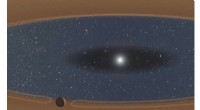
* Gravitational Collapse: As the nebula contracted under its own gravity, it began to spin faster. This spinning motion flattened the nebula into a disk, much like a spinning pizza dough.
* Planetesimals: Within this disk, tiny particles collided and stuck together, forming larger and larger clumps called planetesimals.
* Planetary Formation: Over millions of years, planetesimals continued to collide and grow, eventually forming the planets we see today.
2. Conservation of Angular Momentum
* The Rotating Disk: The original nebula had a slight initial rotation, but as it collapsed, this rotation sped up due to conservation of angular momentum. This is like a figure skater spinning faster when they pull their arms in.
* Spin Direction: All the particles within the disk were spinning in the same direction as the original nebula, which is why the planets all orbit the sun in the same direction.
3. Flat Plane:
* Centrifugal Force: The rotation of the disk created an outward force called centrifugal force. This force balanced the inward pull of gravity, causing the material to settle into a relatively flat plane.
* Orbital Plane: The planets formed within this flat plane, so their orbits are also confined to this plane, which is why they appear to lie in a flat disk.
4. Exceptions and Perturbations:
* While the vast majority of objects in our solar system follow this pattern, there are some exceptions:
* Some comets and asteroids have orbits that are tilted at significant angles to the plane of the planets.
* The orbits of planets are not perfectly flat, but are slightly elliptical.
* These exceptions are primarily due to gravitational interactions between the planets and other celestial bodies.
In summary: The common direction of rotation and the flat plane of the planets is a consequence of the conservation of angular momentum and the dynamics of the collapsing nebula that birthed our solar system. It's a testament to the fundamental laws of physics that govern the universe!