The Sun's Dominance:
* The Sun, by far the most massive object in the solar system, exerts the strongest gravitational pull.
* This pull keeps all the planets, dwarf planets, asteroids, and comets in orbit around it.
Orbital Paths:
* Planets don't just fall into the Sun because they are moving fast enough. This forward motion combined with the Sun's pull creates a balance.
* Think of a ball on a string: you swing it around, the string provides the inward pull, and the ball's motion keeps it from flying away.
* The planets follow elliptical paths around the Sun, with their speed varying depending on their distance.
Gravity's Influence on Shape:
* Gravity doesn't just keep things in orbit, it also affects the shape of celestial bodies.
* The Sun's gravity pulls equally in all directions, resulting in its nearly spherical shape.
* Planets also tend towards spherical shapes due to gravity.
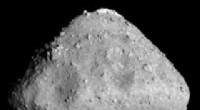
* Even smaller objects like asteroids can be affected by gravity, though their shapes can be more irregular due to their smaller size.
Stability and Change:
* The solar system isn't completely static. Minor gravitational interactions between planets, moons, and other bodies can cause subtle changes in their orbits over time.
* These changes are generally very slow, but over millions of years, they can contribute to significant changes in the solar system's structure.
In summary:
Gravity is the fundamental force that maintains the solar system's shape and stability. It keeps planets in orbit around the Sun, influences the shapes of celestial bodies, and subtly alters their paths over time.