1. Atomic Clocks:
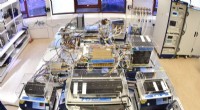
* The Gold Standard: Atomic clocks are the most accurate timekeeping devices we have. They use the precise frequency of atomic transitions (usually cesium) to measure time.
* Unwavering Accuracy: These clocks are so accurate that they lose less than a second every hundred million years.
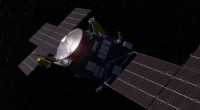
* Space Applications: Atomic clocks are used on spacecraft, satellites, and even the International Space Station to maintain precise timekeeping.
2. GPS and Other Navigation Systems:
* Triangulation: GPS satellites contain atomic clocks. These clocks are used to send signals to receivers on Earth. By measuring the time delay of these signals, receivers can determine their location and synchronize their clocks with the atomic clocks on the satellites.
* Time Synchronization: This system allows for accurate timekeeping anywhere on Earth and in space.
3. Timekeeping on Spacecraft:
* Internal Clocks: Spacecraft typically have internal clocks that are synchronized with a ground station before launch.
* Data Transmission: When a spacecraft sends data back to Earth, the data includes a timestamp based on its internal clock. This allows scientists to track the timing of events on the spacecraft.
4. Astronomical Phenomena:
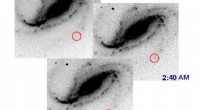
* Pulsar Timing: Pulsars are rapidly rotating neutron stars that emit beams of radiation. The regular pulses of these beams can be used to measure time with high accuracy.
* Solar System Events: Astronomers can use the predictable motions of planets and stars to determine time.
In Conclusion:
While pendulum clocks are not practical in space, astronomers have several highly accurate methods for keeping time, including atomic clocks, GPS systems, and astronomical phenomena. These methods are essential for conducting research and understanding the cosmos.