1. Radial Velocity and Motion:
* Stellar Motion: By measuring the Doppler shift of light from stars, astronomers can determine their radial velocity (motion towards or away from us). This helps understand stellar orbits, galactic rotation, and the movement of stars within clusters.
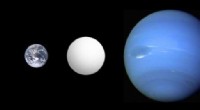
* Exoplanet Detection: The Doppler effect is the primary method for detecting exoplanets. By observing the slight "wobble" in a star's spectrum caused by the gravitational pull of an orbiting planet, astronomers can infer the planet's presence and even its mass.
2. Expansion of the Universe:
* Redshift of Galaxies: The light from distant galaxies is redshifted, meaning it has shifted towards longer wavelengths. This is interpreted as evidence for the expansion of the Universe, where galaxies are moving away from us and the light is stretched as it travels. Measuring the redshift of galaxies helps determine the expansion rate and the age of the Universe.
3. Rotation of Objects:
* Rotation of Stars and Planets: By analyzing the Doppler broadening of spectral lines, astronomers can measure the rotation rates of stars and planets. This helps understand their internal structure and evolution.
4. Gas and Plasma Dynamics:
* Stellar Winds and Jets: The Doppler effect can be used to study the velocity and direction of stellar winds and jets, which are powerful outflows of gas and particles from stars. This provides information on the processes that drive these phenomena.
* Supernova Remnants: The Doppler effect can help determine the expansion rate of supernova remnants, providing insights into the shock waves and dynamics of these powerful explosions.
5. Chemical Composition and Temperature:
* Spectral Lines: The Doppler effect can influence the position and shape of spectral lines, which are unique fingerprints of elements and molecules. By studying these shifts, astronomers can determine the chemical composition and temperature of celestial objects.
In summary, the Doppler effect is an essential tool in astronomy, allowing scientists to study the motion, composition, and evolution of celestial objects and phenomena. It provides valuable insights into the vast and dynamic Universe we live in.