1. Observation of the Night Sky:
* Wandering Stars (Planets): Ancient civilizations like the Babylonians and Greeks observed that some celestial objects moved differently than the "fixed" stars. These "wandering stars" were later identified as planets, like Mercury, Venus, Mars, Jupiter, and Saturn.
* Similar to Earth: The ancient Greeks, particularly philosophers like Aristarchus of Samos, recognized that the Earth wasn't the center of the universe, but rather a celestial body moving around the Sun. This concept naturally led to the idea that other similar celestial bodies could exist.
2. Philosophical and Religious Ideas:
* Infinite Universe: Philosophers like Democritus and Epicurus argued for an infinite universe with potentially countless worlds.
* Religious Texts: Some ancient religious texts, like the Hindu scriptures, described a vast universe with multiple planets and celestial bodies.
3. Scientific Revolution and Beyond:
* Copernican Revolution: Nicolaus Copernicus' heliocentric model (Sun-centered) of the solar system, challenged the geocentric model (Earth-centered) and re-emphasized the possibility of other planets.
* Telescopes: Galileo Galilei's use of the telescope provided further evidence for the existence of other planets, like Jupiter's moons, which he observed.
* Kepler's Laws: Johannes Kepler's laws of planetary motion helped to solidify the understanding of how planets move, and this knowledge facilitated the search for more planets.
4. The Search for Exoplanets:
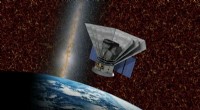
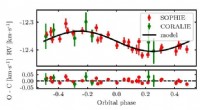
* Modern Technology: The 20th and 21st centuries brought about powerful telescopes and observation methods, specifically designed to detect exoplanets (planets orbiting stars outside our solar system). This has led to the discovery of thousands of exoplanets.
So, while ancient civilizations had the first inklings of other planets, modern science has solidified the idea and even allows us to study these celestial bodies in great detail. The fascination with the idea of other worlds continues to be a driving force in the search for life beyond Earth.