With a smaller telescope (4-6 inches):
* Polar ice caps: You can see the white, icy caps at Mars' north and south poles, especially during favorable opposition periods when Mars is closest to Earth.
* Surface features: With careful observation, you might be able to distinguish some of the larger, darker markings on the surface like Syrtis Major and Hellas Basin. These appear as subtle changes in color and brightness.
* Phase changes: Like our moon, Mars exhibits phases as it orbits the sun. Depending on its position, you'll see a full disk, a crescent, or a gibbous shape.
With a larger telescope (8 inches or more):
* More distinct surface features: You'll be able to discern more details, including darker regions, light-colored deserts, and perhaps even some of the larger canyons and volcanoes.
* Possible color variations: Experienced observers might notice subtle color variations across the Martian surface, reflecting different mineral compositions.
Things you won't see through a telescope:
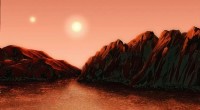
* Detailed landscapes: Mars is far away, and even powerful telescopes won't reveal breathtaking scenery like mountains, valleys, or dunes.
* Any signs of life: Even with the most powerful telescopes, the details are too small to see signs of life.
Tips for observing Mars:
* Timing is key: Mars is most visible during its oppositions, when it is closest to Earth. Check online resources for the next opposition date.
* Clear skies are essential: Choose a location with minimal light pollution and stable atmospheric conditions.
* Use high-quality optics: A larger telescope with good quality lenses and mirrors will make a difference in the details you can see.
* Learn about Mars' geography: Knowing the names and locations of prominent features will help you identify what you're observing.
Beyond Telescopic Observation:
While telescopes offer a glimpse of Mars, more detailed images and information are available through online resources, space probes, and missions like the Mars rovers.
Remember, observing Mars is a rewarding experience that can spark curiosity and inspire further exploration. So, grab your telescope and begin your journey to the red planet!