* Higher Mass: Bigger stars have significantly more mass. This means they have a lot more hydrogen fuel to burn, but the extra gravity also increases the pressure and temperature at their core.
* Faster Nuclear Fusion: The increased pressure and temperature in the core accelerate the nuclear fusion process. This means they burn through their hydrogen fuel much faster than smaller stars.
* Higher Energy Output: Big stars are incredibly luminous, radiating immense amounts of energy. This energy output further accelerates the depletion of their fuel.
* Shorter Main Sequence: Stars spend most of their lives in the "main sequence" phase, where they primarily fuse hydrogen into helium. Larger stars burn through their hydrogen much faster, leaving them with a shorter main sequence lifespan.
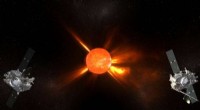
* Unstable End: Once they run out of hydrogen fuel, large stars quickly enter a series of unstable phases, culminating in spectacular supernova explosions. These explosions are so powerful that they can leave behind dense remnants like neutron stars or black holes.
Analogy: Imagine two cars, one small and one large. The large car has a bigger engine and burns more fuel, but it can also go much faster. The small car will last longer because it burns fuel more slowly, even though it has less fuel to start with. Similarly, a big star is like the fast car, burning through its fuel rapidly and having a much shorter lifespan than a smaller star.