Astronomers can indeed measure the rotation of Venus using optical telescopes by observing surface markings. Here's how it works:
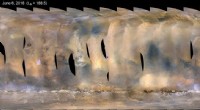
* Surface Markings: Venus is covered in thick clouds, obscuring its surface from direct view. However, these clouds have subtle variations in brightness and texture, which act as "markings". These markings are caused by differences in altitude, temperature, and composition of the clouds.
* Rotation and Tracking: As Venus rotates, these markings appear to move across the planet's disk. Astronomers track the movement of these markings over time, similar to how we might track a landmark on a rotating Earth.
* Calculating Rotation: By measuring the time it takes for the markings to complete a full cycle across the disk, astronomers can determine the period of Venus's rotation.
Note: While this technique is used, it is not the only way to measure Venus's rotation. Radar imaging and spacecraft observations have also provided valuable data.