Here's a breakdown:
* Solar activity: The sun constantly emits a stream of charged particles called solar wind.
* Earth's magnetic field: This field surrounds our planet and acts like a shield, deflecting most of the solar wind.
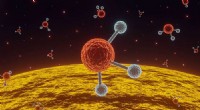
* Interactions in the atmosphere: Some particles from the solar wind do manage to penetrate the magnetic field and enter the Earth's atmosphere, primarily near the poles. These charged particles collide with atoms and molecules in the atmosphere, exciting them.
* Light emission: As the excited atoms return to their normal state, they release energy in the form of light. This light is what we see as the aurora.
The colors of the aurora vary depending on the type of atom or molecule involved in the collision and the energy level of the collision. For example, oxygen produces green and red auroras, while nitrogen produces blue and purple auroras.