Here's why:
* Light Reflection: Objects reflect light because their surface interacts with photons (particles of light). Some surfaces are more reflective than others, depending on their composition and structure.
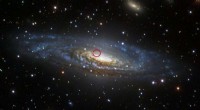
* Celestial Bodies: All planets, moons, asteroids, comets, and even stars reflect light. They receive light from the sun (or other stars) and then scatter some of that light back into space.
* Brightness: The amount of light reflected by a celestial body depends on its size, composition, and distance from the light source.
* Shine: Some celestial bodies, like planets and moons, appear bright because they reflect a significant amount of sunlight. Others, like asteroids and comets, are much fainter because they are smaller and reflect less light.
So, while Earth's moon is a familiar example of a celestial body reflecting light, it's not the only one. The entire universe is filled with objects reflecting light, creating the beautiful and intricate tapestry we observe in the night sky.