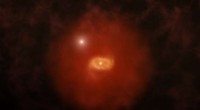
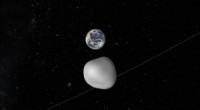
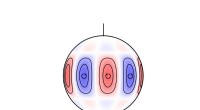
* White dwarfs are the remnants of stars. They are formed when stars like our sun run out of fuel and shed their outer layers, leaving behind a dense, hot core.
* The moon is a natural satellite. It formed from the debris left over after a giant impact with the young Earth. It is primarily composed of rock and ice.
Here are some key differences between the moon and white dwarfs:
* Size: White dwarfs are about the size of Earth, while the moon is much smaller.
* Temperature: White dwarfs are incredibly hot, radiating heat from their internal fusion. The moon is cold and does not produce its own heat.
* Composition: White dwarfs are composed of dense matter, primarily carbon and oxygen. The moon is mostly rock and ice.
In summary, the moon is a rocky satellite, while a white dwarf is the dense, hot remnant of a star.