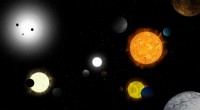
* Moons vs. Planets: Moons orbit planets, while planets orbit stars. Their sizes and densities are determined by different factors.
* Size Metrics: We can use diameter, volume, or mass to compare sizes. Each metric gives a different picture.
Here's a breakdown to help you visualize the comparison:
Largest Moons:
* Ganymede (Jupiter): Diameter ~ 5,268 km, larger than the planet Mercury.
* Titan (Saturn): Diameter ~ 5,149 km, slightly smaller than Mercury.
* Callisto (Jupiter): Diameter ~ 4,821 km, smaller than Mercury.
* Io (Jupiter): Diameter ~ 3,643 km, larger than Earth's moon but significantly smaller than Mercury.
Smallest Planets:
* Mercury: Diameter ~ 4,880 km
* Mars: Diameter ~ 6,779 km
Comparison:
* Diameter: The largest moons (Ganymede and Titan) are actually larger than the smallest planet, Mercury.
* Volume/Mass: While some large moons are larger in diameter, they are less dense than planets, so they have smaller volumes and masses.
Key Takeaway:
While the largest moons can be larger in diameter than some planets, their overall size and mass are still significantly less than even the smallest planet.
It's interesting to note that the largest moon, Ganymede, is larger than both Mercury and Pluto, which are often considered planets. This highlights the complex and fascinating size variations within our solar system.