1. Structure:
* Sun: The central star of the solar system, providing the gravitational force that holds everything together and the light and heat that sustains life on Earth.
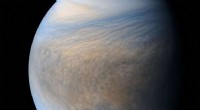
* Planets: Eight planets in our solar system, orbiting the sun in a relatively flat plane: Mercury, Venus, Earth, Mars, Jupiter, Saturn, Uranus, and Neptune.
* Dwarf Planets: Celestial bodies that orbit the sun, but are not large enough to clear their orbital path of other objects (e.g. Pluto, Ceres, Eris).
* Moons: Natural satellites that orbit planets (Earth has one moon, Jupiter has over 70).
* Asteroids: Rocky bodies that orbit the sun, mainly concentrated in the asteroid belt between Mars and Jupiter.
* Comets: Icy bodies that orbit the sun, leaving a trail of dust and gas as they approach.
2. Formation:
* Accretion Disk: The solar system formed from a rotating disk of gas and dust.
* Gravitational Collapse: The central portion of the disk collapsed under its own gravity, forming the sun.
* Planetesimals: Small particles in the disk began to clump together, forming larger bodies called planetesimals.
* Planetary Formation: Planetesimals continued to collide and grow, eventually forming the planets.
3. Orbits:
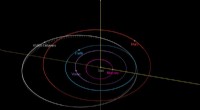
* Kepler's Laws: Planets orbit the sun in elliptical paths, with the sun at one focus.
* Orbital Plane: Most planets orbit the sun on a nearly flat plane called the ecliptic.
* Orbital Period: The time it takes a planet to complete one orbit around the sun varies depending on the planet's distance from the sun.
4. Composition:
* Rocky Planets: Mercury, Venus, Earth, and Mars are made primarily of rock and metal.
* Gas Giants: Jupiter, Saturn, Uranus, and Neptune are made primarily of gas and ice.
* Ice Giants: Uranus and Neptune are sometimes classified as ice giants due to their large amount of ice.
* Asteroids: Made primarily of rock and metal.
* Comets: Made primarily of ice, dust, and gas.
5. Other Key Features:
* Gravity: The force that holds the solar system together.
* Electromagnetism: Plays a role in the interaction of charged particles in the solar system, including the solar wind.
* Solar Wind: A stream of charged particles emitted by the sun.
* Magnetosphere: A region of space surrounding a planet, dominated by the planet's magnetic field.
6. Evolution:
* The solar system is constantly evolving: Planets are slowly losing their atmospheres, comets are being ejected from the solar system, and the sun is slowly getting hotter.
* The study of the solar system is ongoing: Scientists are constantly learning new things about the solar system through observation and exploration.
This list provides a general overview of the main characteristics of the solar system. Each aspect can be explored in much greater detail, and there are many more specific details that could be included.