1. White Dwarf:
* Formed from the collapse of stars with masses similar to our Sun or smaller.
* Their core is primarily composed of carbon and oxygen.
* They are very dense, packing the mass of the Sun into a sphere about the size of Earth.
* They slowly cool down over billions of years, eventually fading into black dwarfs.
2. Neutron Star:
* Formed from the collapse of more massive stars, typically between 8 and 20 times the mass of the Sun.
* During collapse, protons and electrons are forced together to form neutrons, creating a core composed almost entirely of neutrons.
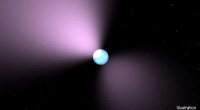
* They are extremely dense, packing the mass of the Sun into a sphere only a few miles across.
* They spin rapidly and emit powerful magnetic fields, often exhibiting pulsars.
3. Black Hole:
* Formed from the collapse of the most massive stars, exceeding 20 solar masses.
* Gravity is so intense that even light cannot escape from its surface.
* The event horizon defines the point of no return, beyond which nothing can escape.
* They have a profound impact on their surroundings, warping spacetime and affecting the motion of nearby objects.
Important Note:
While the term "collapsed star" is often used to describe all these remnants, it's important to remember that they are distinct objects with unique properties. The specific type of collapsed star depends on the initial mass of the progenitor star.