* Gravity: The Sun has a massive gravitational pull that attracts everything around it, including planets and satellites. This pull is what keeps them from flying off into space.
* Inertia: Objects in motion tend to stay in motion. Planets and satellites, due to their initial formation, were already in motion. They have a tendency to travel in a straight line.
The Orbit:
1. Initial Motion: Imagine a planet was initially moving in a straight line (due to inertia). The Sun's gravity pulls it towards itself, slightly altering its path.
2. Curved Path: Instead of a straight line, the planet's path becomes curved. This is because gravity constantly pulls the planet towards the Sun, while inertia wants it to continue in a straight line.
3. Balance: The planet's forward momentum (inertia) and the Sun's pull (gravity) find a balance. This balance results in a circular or elliptical orbit, where the planet continuously falls towards the Sun but never actually hits it.
Think of it like this: If you swing a ball on a string, the ball wants to fly off in a straight line (inertia), but the string (gravity) keeps pulling it back, forcing it to move in a circle.
Key points:
* The stronger the Sun's gravity, the faster a planet needs to move to maintain its orbit.
* The closer a planet is to the Sun, the faster it needs to move to maintain its orbit.
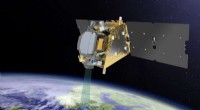
* This same principle applies to satellites orbiting planets, just with a smaller scale.
Let me know if you want to delve deeper into the math behind orbits!