1. Direct Observation:
* Phases of the Moon: The changing phases of the moon, from crescent to full, demonstrate that it is a sphere. If the moon were flat, we would see it as a disc throughout its cycle.
* Lunar Eclipses: During a lunar eclipse, the Earth's shadow falls on the moon. The shape of the shadow is always round, regardless of the moon's position. This confirms that the moon is spherical, as a flat object would cast a different shaped shadow.
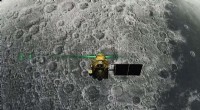
* Spacecraft Images: Images taken by spacecraft orbiting the moon clearly show its spherical shape.
2. Physical Principles:
* Gravity: Gravity acts equally in all directions. This means that any large celestial body will pull itself into a spherical shape due to the force of its own gravity. Smaller objects, like asteroids, may not be perfectly spherical due to their lower gravity.
* Rotation: The moon rotates on its axis. If it were not spherical, it would wobble or have irregular movements due to uneven mass distribution.
3. Historical Observations:
* Ancient Astronomers: Even ancient civilizations were aware of the moon's spherical shape. They observed the lunar phases and eclipses, leading them to deduce its roundness.
In summary, we know the moon is spherical due to direct observations of its shape and phases, the understanding of how gravity affects celestial bodies, and historical observations dating back thousands of years.