* They are small: Meteoroids are small pieces of debris, typically smaller than a grain of sand. Their small mass means they are easily influenced by the gravitational pull of other objects.
* Unstable orbits: Unlike larger objects, meteoroids can have highly erratic, unstable orbits. They are easily deflected by the Sun's radiation pressure, the gravitational pull of planets, and even collisions with other objects.
* Short-lived: Meteoroids are often temporary residents of our solar system. They may exist for a relatively short period before either burning up in the atmosphere as meteors, colliding with a celestial body, or being ejected from the solar system entirely.
How they interact with the Sun:
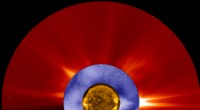
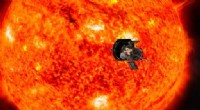
* Gravity: The Sun's gravity does exert a pull on meteoroids, but their small mass and unstable orbits mean they are not strongly bound to the Sun.
* Radiation pressure: The Sun's radiation also exerts a small but significant force on meteoroids, pushing them away from the Sun. This effect is particularly noticeable for smaller meteoroids.
Therefore, rather than orbiting in a stable elliptical path like planets, meteoroids often move in unpredictable, haphazard paths through the solar system, influenced by a combination of gravity, radiation pressure, and collisions.
Key takeaway: While meteoroids are influenced by the Sun's gravity, they don't have the same kind of stable orbit as larger celestial bodies. Their movements are much more chaotic and temporary.