1. Stellar Nebula:
* Stars begin as vast clouds of gas and dust called nebulas.
* These nebulas contain mostly hydrogen and helium, along with trace amounts of heavier elements.
* Gravity pulls the material together, causing it to condense and heat up.
2. Protostar:
* As the nebula collapses, the core heats up and begins to glow, forming a protostar.
* The protostar is still surrounded by a disk of gas and dust.
* Nuclear fusion has not yet begun.
3. Main Sequence:
* When the core of the protostar reaches a temperature and pressure high enough, nuclear fusion begins.
* Hydrogen atoms fuse to form helium, releasing enormous amounts of energy.
* This energy outward pressure balances the inward pull of gravity, creating a stable star.
* Most of a star's life is spent on the main sequence.
* The size, temperature, and color of a main sequence star depend on its mass. More massive stars are hotter, brighter, and shorter-lived.
4. Post-Main Sequence:
* Once the hydrogen fuel in the core is exhausted, the star leaves the main sequence and enters its post-main sequence stage.
* What happens next depends on the star's mass.
For stars less massive than the Sun:
* The star expands to become a red giant.
* It eventually sheds its outer layers, forming a planetary nebula.
* The core collapses into a white dwarf, a dense, hot remnant.
For stars more massive than the Sun:
* The star expands to become a supergiant.
* It undergoes a supernova explosion, which blasts the star's outer layers into space.
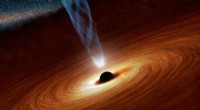
* The core collapses, forming either a neutron star or a black hole, depending on its mass.
Key takeaway: The main sequence is a crucial stage in the life of a star, during which it generates energy through nuclear fusion and shines brightly for a significant portion of its lifetime. The star's final fate after leaving the main sequence is determined by its initial mass.