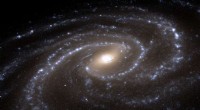
* Nearest Galaxy: The nearest galaxy to our Milky Way is the Andromeda Galaxy, located about 2.5 million light-years away.
* Typical Distances: Galaxies are generally spaced millions or even billions of light-years apart. For example, the Virgo Cluster, the closest large cluster of galaxies to us, is about 50 million light-years away.
* Vast Distances: The observable universe extends for billions of light-years, and galaxies are scattered throughout this immense space. The most distant galaxies observed are billions of light-years away.
Measuring Galactic Distances:
Measuring distances in the universe is a complex and challenging task. Astronomers use various techniques:
* Standard Candles: These are objects with known luminosity, like Cepheid variable stars and Type Ia supernovae. By comparing their apparent brightness to their actual brightness, we can estimate their distance.
* Redshift: The expansion of the universe causes light from distant galaxies to be shifted towards longer wavelengths (redshifted). The amount of redshift is related to the galaxy's distance.
* Parallax: Measuring the apparent shift in a star's position against the background stars due to Earth's orbit around the Sun allows us to calculate its distance. This method works for closer stars, but not for galaxies.
Important Note: The distances between galaxies are constantly changing due to the expansion of the universe.
To summarize:
* The scale of distances between galaxies is enormous, ranging from millions to billions of light-years.
* Measuring these distances is challenging and requires sophisticated techniques.
* The universe is constantly expanding, meaning these distances are not fixed.