* Light from stars travels through a vacuum in space. This means it travels in straight lines and at a constant speed.
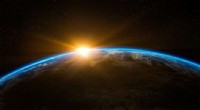
* Earth's atmosphere is not uniform. It contains pockets of air at different temperatures and densities, creating varying refractive indices.
* As starlight enters the atmosphere, it's bent and refracted (changed direction) by these different pockets of air. This bending happens randomly and continuously as the air moves and shifts.
* The result is that the light from a star is constantly being deflected in different directions. This causes the apparent position of the star to fluctuate slightly, making it appear to twinkle.
Other factors that influence twinkling:
* Altitude of the star: Stars closer to the horizon twinkle more because their light has to pass through more of the atmosphere.
* Atmospheric conditions: Twinkling is more pronounced on nights with strong winds or temperature variations.
Interestingly:
* Planets don't twinkle as much as stars because they are much closer to Earth. This means the light from planets is less affected by the small-scale variations in the atmosphere.
Let me know if you want to explore other fascinating aspects of astronomy!