The Sun:
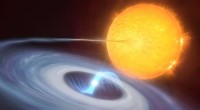
* Formation: Scientists hypothesize the Sun formed from a giant cloud of gas and dust called a nebula. Gravity pulled this material together, causing it to heat up and eventually ignite nuclear fusion at its core, creating the star we see today.
* Life Cycle: The Sun is currently in its main sequence phase, fusing hydrogen into helium. Scientists hypothesize that it will eventually become a red giant, expanding significantly, and finally a white dwarf, a small, dense, and dim remnant.
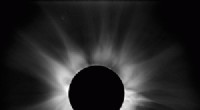
* Solar Activity: The Sun's surface is constantly changing, with sunspots, solar flares, and coronal mass ejections. Scientists are working to understand how these events are generated and how they impact Earth's atmosphere and technology.
* Influence on Planets: The Sun's gravitational pull keeps the planets in their orbits. Its heat and light are vital for life on Earth and influence the climates of other planets.
Planets:
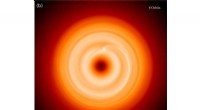
* Formation: Scientists hypothesize that planets formed from the same disk of gas and dust that surrounded the young Sun. Dust particles clumped together, forming planetesimals, which eventually grew into planets.
* Diversity of Planets: Our solar system contains a wide range of planets: rocky terrestrial planets, gas giants, ice giants, and dwarf planets. Scientists are working to understand how these different types of planets formed.
* Habitability: Scientists are searching for planets that could potentially support life. They are looking for planets in the "habitable zone," where temperatures are suitable for liquid water to exist on the surface.
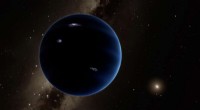
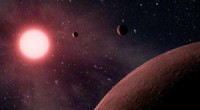
* Exoplanets: Scientists have discovered thousands of planets outside our solar system, called exoplanets. This is revolutionizing our understanding of planet formation and the potential for life in the universe.
Key Areas of Current Research:
* Planet Formation: How exactly did planets form? What were the specific processes and conditions?
* Solar System Evolution: How has our solar system changed over time? What will happen to it in the future?
* Exoplanet Characterization: What are exoplanets like? What are their compositions, atmospheres, and climates?
* Habitability: What are the key ingredients for a planet to be habitable? Are there any other planets that could support life?
It's important to remember that these are just hypotheses! Scientists are constantly testing and refining these ideas through observation and experimentation.