Unusual Orbital Characteristics:
* Horseshoe Orbits: These orbits are shared by two celestial bodies where they appear to chase each other around a larger body, constantly switching positions. They are relatively rare and involve a delicate balance of gravitational forces.
* Tumbling Orbits: Some objects in space, particularly smaller asteroids and comets, can tumble chaotically as they orbit a larger body. This is often due to irregular shapes or uneven mass distribution.
* Hyperbolic Orbits: These are open orbits where an object is moving too fast to be captured by the gravity of a larger body. The object will pass by the body and continue on a path that will never return.
* Retrograde Orbits: These orbits are in the opposite direction of the dominant orbital direction of other objects in a system. For example, some moons of Jupiter and Saturn orbit in the opposite direction of the planet's rotation.
* Lagrange Points: These are five points in a two-body system where the gravitational forces of the two bodies balance out. Objects placed at these points can maintain their positions relative to the two bodies.
Unusual Phenomena Related to Orbits:
* Orbital Resonance: This is a phenomenon where the orbital periods of two or more celestial bodies are related by a simple ratio. For example, Pluto and Neptune are in a 3:2 resonance, meaning Pluto completes three orbits for every two orbits of Neptune.
* Orbital Decay: The orbit of a celestial body can decay due to various factors like atmospheric drag (for objects in close orbits around planets with atmospheres) or tidal forces.
* Precession: The orientation of an orbit can change over time due to various gravitational influences. This is called precession.
Unusual Examples of Orbits:
* The "Dance" of Pluto and Charon: Pluto and its largest moon, Charon, are so close in size that they actually orbit a common point in space between them.
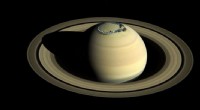
* The "Shepherd Moons" of Saturn's Rings: These small moons help shape and maintain the structure of Saturn's rings by gravitationally influencing the ring particles.
* The "Exoplanet Hot Jupiters": These massive gas giants orbit very close to their stars, much closer than Jupiter orbits the Sun.
Ultimately, "unusual" is a matter of perspective. The more we learn about orbits, the more we realize that the universe is full of complex and fascinating dynamics. It's the unusual, the unexpected, that often leads to groundbreaking discoveries.