Here's why:
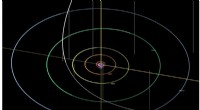
* Planets orbit a star: They are held in place by the star's gravity, constantly moving around it in a predictable path.
* Planets are massive: They are much larger than asteroids or comets, often with a significant amount of mass.
* Planets are typically spherical: Their own gravity pulls them into a roughly spherical shape.
There are also other celestial bodies that can move around a star, but they are not considered planets:
* Dwarf planets: These are smaller than planets and may not have cleared their orbital path of other objects. Examples include Pluto and Ceres.
* Moons: These are smaller bodies that orbit a planet, not a star.
* Asteroids and comets: These are smaller objects that orbit a star, but they are much smaller than planets and are often found in belts or clouds.
So, the most accurate answer to your question is planets.