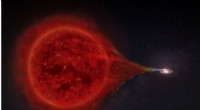
1. Stars: The most prominent component of the Milky Way is its vast population of stars. These stars come in various sizes, ages, and colors, ranging from tiny red dwarfs to massive blue giants. Our own sun is just one of billions of stars within the galaxy.
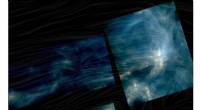
2. Gas and Dust: Interstellar space is not empty, but filled with clouds of gas and dust. These clouds consist primarily of hydrogen and helium, along with trace amounts of heavier elements. They play a crucial role in star formation.
3. Nebulae: Nebulae are giant clouds of gas and dust that are often illuminated by nearby stars. These clouds can be classified into different types, including emission nebulae, reflection nebulae, and dark nebulae. They are regions of active star formation.
4. Dark Matter: A large portion of the Milky Way's mass is believed to be composed of dark matter, a mysterious substance that does not emit light but exerts a gravitational pull on visible matter. Its existence is inferred through its gravitational effects on stars and galaxies.
5. Black Hole: At the center of the Milky Way lies a supermassive black hole called Sagittarius A*. This black hole has a mass millions of times greater than our sun and plays a significant role in the galaxy's evolution.
6. Globular Clusters: These are dense spherical clusters of stars that orbit the galactic center. They contain hundreds of thousands or even millions of stars, all held together by their mutual gravitational attraction.
7. Open Clusters: These are looser groupings of stars that are typically found in the galactic disk. They are relatively young and contain only a few hundred stars.
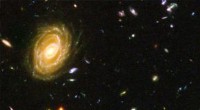
8. Galactic Disk: This is the flat, rotating disk that comprises most of the galaxy's visible matter. It contains the spiral arms, where most star formation occurs.
9. Galactic Bulge: This is a central, spheroidal region of the galaxy that is denser than the disk. It contains older stars and is thought to be the site of a supermassive black hole.
10. Galactic Halo: This is a spherical region that surrounds the disk and bulge. It contains a sparse population of stars, globular clusters, and dark matter.
The Milky Way is a dynamic and complex system, constantly evolving as stars are born, live, and die. Understanding its composition is essential to understanding the formation and evolution of galaxies in general.