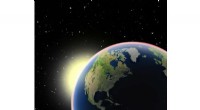
The inner planets of our solar system, Mercury, Venus, Earth, and Mars, exhibit a wide range of atmospheric characteristics, despite their proximity to the sun.
Here's a comparison of their atmospheres:
| Feature | Mercury | Venus | Earth | Mars |
|---|---|---|---|---|
| Atmosphere Composition | Very thin, primarily sodium, potassium, helium, hydrogen | Dense, mostly carbon dioxide (96.5%) with nitrogen (3.5%) | Mostly nitrogen (78%) and oxygen (21%) with trace amounts of other gases | Thin, primarily carbon dioxide (95%) with nitrogen (2.7%) and argon (1.6%) |
| Atmospheric Pressure | ~10⁻¹⁵ bar (almost a vacuum) | 92 bar (92 times Earth's pressure) | 1 bar | ~0.006 bar (less than 1% of Earth's pressure) |
| Surface Temperature | Ranges from -173°C to 427°C depending on location and time | ~464°C (hottest planet) | Varies widely from -88°C to 58°C | Ranges from -143°C to 30°C depending on location and time |
| Presence of Clouds | No significant clouds | Dense, sulfuric acid clouds | Water vapor and other clouds | Thin, carbon dioxide clouds |
| Weather | No significant weather patterns | Extreme greenhouse effect, with slow winds and high temperatures | Diverse weather patterns with storms, rain, and wind | Dust storms, occasional water ice clouds, and weak winds |
| Magnetic Field | Very weak, almost negligible | None | Significant, protecting us from solar radiation | Very weak, not strong enough to protect the planet from solar radiation |
| Life | None | None | Abundant life forms | No known life forms |
Key Differences and Considerations:
* Density: Venus has an extremely dense atmosphere due to its high concentration of greenhouse gases, resulting in a runaway greenhouse effect. Earth's atmosphere is much thinner and allows for a comfortable temperature range. Mars and Mercury have very thin atmospheres, with Mercury practically having none.
* Greenhouse Effect: Venus's dense atmosphere traps heat, making it the hottest planet in our solar system. Earth's atmosphere also exhibits a greenhouse effect, which is essential for life but is becoming problematic due to increasing carbon dioxide levels. Mars has a negligible greenhouse effect due to its thin atmosphere.
* Weather: Earth's atmosphere creates diverse weather patterns, while Venus's dense atmosphere results in slow, hot winds. Mars has thin, weak winds and occasional dust storms. Mercury's lack of atmosphere means it has no weather patterns.
* Life: The presence of an atmosphere is crucial for life. Earth's atmosphere is ideal for supporting a diverse biosphere, while the atmospheres of the other inner planets are either too thin or too hostile to support life as we know it.
In conclusion:
The inner planets of our solar system showcase a fascinating array of atmospheric conditions, highlighting the diversity of our planetary system. These differences in atmospheric composition, density, and temperature play crucial roles in determining the habitability of each planet.