Natural Sources:
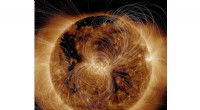
* The Sun: Our primary source of light and heat. It's a giant ball of burning gas.
* Stars: Distant suns, each emitting their own light.
* Fire: A chemical reaction that produces light and heat.
* Lightning: A sudden discharge of electricity in the atmosphere, creating a bright flash.
* Bio-luminescence: Light produced by living organisms, like fireflies, jellyfish, and some deep-sea creatures.
Artificial Sources:
* Incandescent bulbs: These use a filament heated to incandescence (glowing brightly).
* Fluorescent bulbs: These use electricity to excite gas atoms, causing them to emit light.
* LED (Light Emitting Diode) bulbs: These use semiconductors to produce light with high efficiency.
* Lasers: Devices that produce a highly focused beam of light.
* Screens: TVs, computers, phones, all emit light from LEDs or other light sources.
* Glow sticks: These create light through a chemical reaction.
* Phosphorescent materials: These absorb light and release it slowly, creating a glow in the dark effect.
Other Sources:
* Chemical reactions: Some chemical reactions produce light, such as chemiluminescence.
* Nuclear reactions: Nuclear explosions and nuclear reactors emit light.
* Friction: Friction can generate heat, which can then produce light, as seen in sparks from grinding metal.
Let me know if you'd like to explore any of these sources in more detail!